
Lila Sarick, Staff Reporter, Wednesday, June 10, 2015
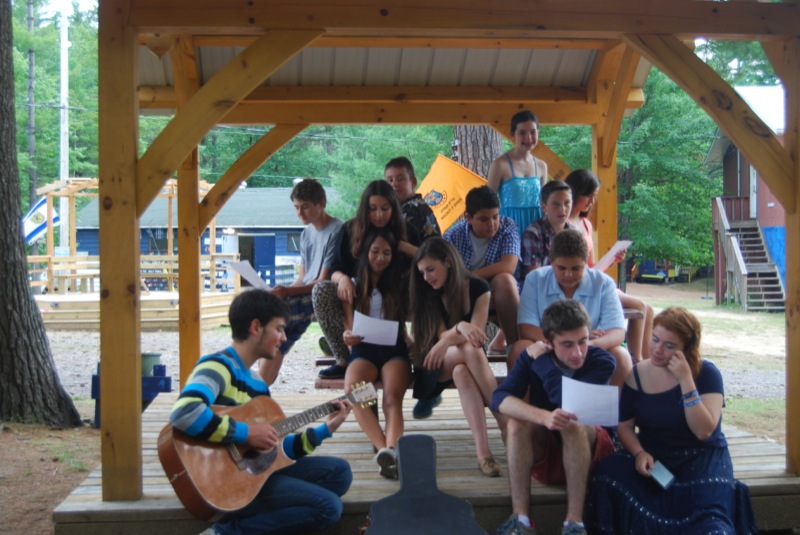
JCamp180, a philanthropic organization based in Massachusetts, is the reason why Ontario’s Camp Gesher has brand-new cabins and a much more sophisticated board of directors. Read more ….
Lila Sarick, Staff Reporter, Wednesday, June 10, 2015
JCamp180, a philanthropic organization based in Massachusetts, is the reason why Ontario’s Camp Gesher has brand-new cabins and a much more sophisticated board of directors. Read more ….

NEW YORK (Press Release)–The U.S. Area Elections Committee chair has found that there is no basis for the request made by the ZOA to disqualify the Hatikvah progressive Zionist slate, established for the upcoming World Zionist Congress elections in the United States. Ironically, the ZOA is attempting to delegitimize the ideological heirs of those who established the state of Israel and since that time have helped sustain the Zionist dream. Ameinu, Partners for Progressive Israel, Habonim Dror and Hashomer Hatzair, the organizational members of the Hatikvah Slate, have presented a platform that represents today’s mainstream peace and democracy camp of Israel. Read more …..

December 26, 2014 11:32am
(JTA) — Jacques Wagner, the governor of the Brazilian state of Bahia, was named the federal government’s next minister of defense.
President Dilma Rousseff tapped Wagner, 63, and 12 other new cabinet ministers on Tuesday following her re-election in October.
Born in Rio de Janeiro to Jewish immigrants from Poland, Wagner, a former activist with the Zionist Habonim Dror movement, was elected governor in 2007. He had previously served as minister of labor under former president Luiz Inacio Lula da Silva. Read more …
This is a San Francisco synagogue where we have a few alumni families (and a growing number of current chanichim). The principal is super friendly and loves Habonim Dror.
Congregation Beth Sholom, a synagogue affiliated with the Conservative movement, currently seeks a part-time (about 10 – 15 hours per month) Teen Educator / Youth Group Leader – Advisor.

By: Amishai Gottlieb, © 2014 Jewish Exponent
Anyone who happened to pass by the library at the Jewish Community Services Building in Center City on Nov. 13-14 was virtually transported to Rabin Square in Tel Aviv.
In memory of the anniversary of former Israeli Prime Minister Yitzhak Rabin’s murder on Nov. 4, 1995 by a right-wing Jewish activist, three Habonim Dror youth movement counselors — all college-aged — set up an exhibit in honor of the late leader. Article no longer in archive.
ABOVE Dan Shahar (right) does a trial lecture for fellow exhibit leaders (from left) Adi Goldberg, Hila Huber and Ross Weisman. Photo by Amishai Gottlieb.
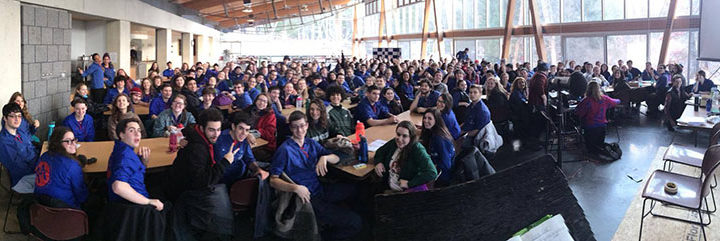
This is the last day to register for Winter Seminar without paying a late fee!
by Eitan Tako
During the Ten Days of Repentance, right after Rosh HaShana and before Yom Kippur, hides a fast that marks an occasion from 2,500 years ago.
This is the fast of Gedaliah.
by Zach Pekarsky
Rosh haShana is known by many different names, each reflecting different aspects of its history, meaning, and traditions. I’d like to take the time to reflect briefly on many of them.
by Jeremy Oziel
Symbols are a huge part of any Jewish holiday. Symbols are what remind us why a holiday is important and why we choose to celebrate it. Symbols help us to find meaning in our practice and belief. They can also inform how we celebrate different holidays. In many cases, symbols from the holidays remind us of the time we spend with our families. On a simple level, symbols are also a very practical way to pass down traditions. Children learn easily through symbols, especially through those that are food related. These are the ones I like the most. For instance, most of us can remember when we learned that Rosh haShana was about turning the page on the old year and looking forward to a sweet new one — through eating apples and honey. You may not have even been old enough to understand why there was another new year that came on January 1st, but you associated the beginning of school and the high holidays with the taste of apples and honey.
by David Meyer
Why will I fast on Yom Kippur this year? To fast or not to fast is an annual game time decision. When I choose to fast or attend services, it is on the grounds that those are, simply put, the activities Jews should be doing on Yom Kippur. Some years I even break the fast early on the grounds that I’ve sufficiently satisfied my desire to engage with Jewish traditions and customs —the lived experience of being Jewish. Other years, I am inspired by my friends and family to persist until the end of Ne’ilah. I’ve always made fasting a decision into which I put serious thought and consideration, but my thoughts have always been about peoplehood rather than spirituality. I would not be surprised if other Habonim Dror members and alumni have felt similarly.